

Today, Australia’s Ghan Train sweeps in luxury from Adelaide to Darwin, complete with fine dining and plush cabins. One of the world’s great train journeys.
But the original Ghan Train was something far grittier—and far more heroic. A train born out of necessity, stubborn optimism, and a deep desire to conquer Australia’s vast and unforgiving interior.
In the late 19th century, Australians dreamed of linking the southern cities to the remote north, replacing the Afghan cameleers who from the 1860s, transported supplies across the country’s arid inland. As these cameleers had been vital to developing the vast inland, when the railway followed their Central Australian route, naming the train “The Ghan” was only fitting.
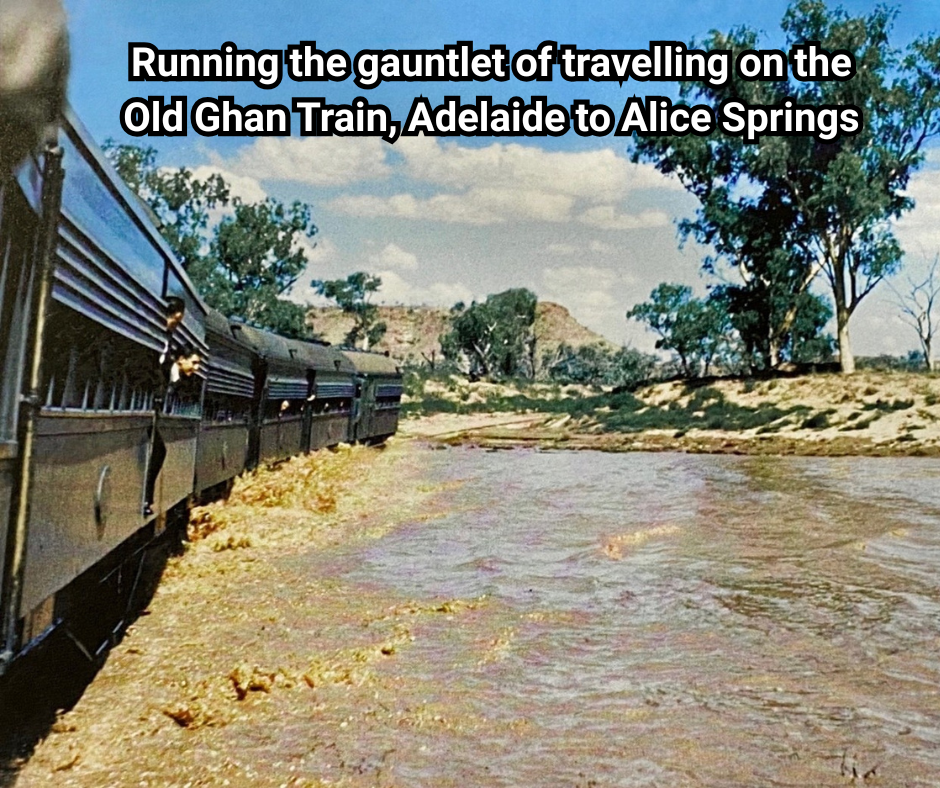
The first Ghan ran between Port Augusta and Alice Springs in 1929. Officially the three-thousand-kilometre journey took three days and two nights, officially being the key word. Both the original steam powered and later diesel powered trains were notoriously unreliable. Their narrow-gauge line followed the natural contours of the land, which unfortunately included travelling down into, across the dry riverbed and up out of numerous rivers and creeks. When it rained (rare, but dramatic), those riverbeds became raging torrents, and the Ghan often found itself stranded, sometimes for days, occasionally weeks. Passengers learned to pack patience along with their luggage.
Despite these challenges—or perhaps because of them—the original Ghan became legendary. Crews battled extreme heat, flash floods, and mechanical breakdowns with determination and a good dose of bush ingenuity. Supplies, mail, livestock, and hopeful travellers all depended on the train. For many remote communities, the Ghan wasn’t just transport; it was their only lifeline.
The journey was far from glamorous with carriages swaying and rattling, dust finding its way into every crevice, and schedules that were more of a suggestion than a promise. Yet passengers often recalled the journey with affection, a shared sense of adventure, a feeling that everyone aboard was part of something bigger than themselves. All participants in the taming of the Outback.
The original Ghan was replaced in 1980 construction of a new line and the replacement of the old engines and carriages, closing a chapter of Australian transport history that was equal parts hardship and heroism.
Today’s Ghan was extended to reach Darwin in 2004, now with the offer of comfort and champagne, but it owes its reputation to that original, dust-covered train that refused to give up—even when the desert tried its best to stop it.
Largely set in Central Australia and Alice Springs, in Outback Danger, one of William Sims’ Outback Adventures novels, Mike Thompson’s Ghan journey arrives in Adelaide ten days late.
Outback Danger novel: https://www.williamsimsbooks.com/outbackdanger
Website: https://www.williamsimsbooks.com/
Top Photo - Crossing the Finke Rive in mid 1950s - by Peter Dunham
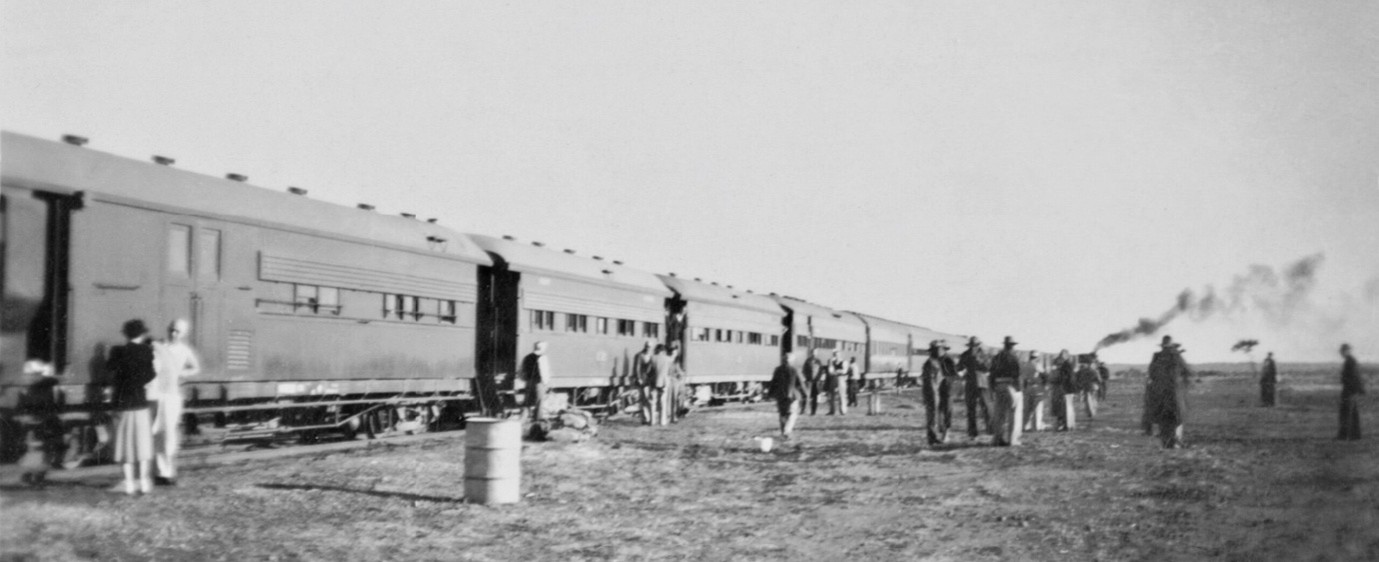
Bottom Photo - Desert Rest Stop 1948 - Dorothy Pratt - State Library of South Australia
The Original Ghan: Australia’s Legendary Train